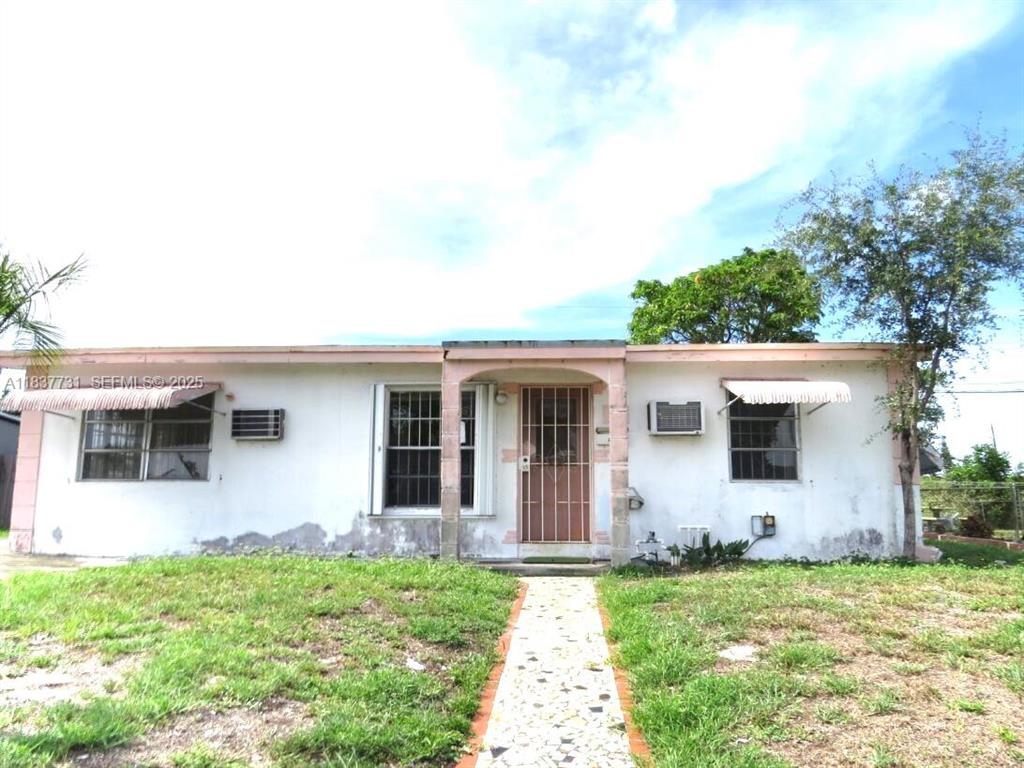
From price reductions and repairs to commissions and costs, the gap between market value and net proceeds is leaving many homeowners with less than they expect.
CORAL SPRINGS, FL, UNITED STATES, September 15, 2026 /EINPresswire.com/ — A Florida homeowner owns a house worth approximately $500,000 and owes $350,000 on the mortgage. Simple math suggests the homeowner has $150,000 in equity. Real-world real estate economics say otherwise.
In markets like Broward County, third-party housing data reveals a growing disconnect between perceived equity and actual seller proceeds. According to July 2026 data from MIAMI REALTORS® + RWorld, single-family homes have been selling at a median of approximately 96% of their original list price. For homeowners counting on their full apparent equity, the final settlement statement can deliver a costly surprise.
The erosion of equity begins with the asking price. If a seller lists an average-condition home at $500,000 while competing directly with updated, move-in-ready properties at similar prices, the market may simply respond with silence.
The danger of waiting is tangible. A 2026 Redfin analysis found that a staggering 62.6% of listings in the Miami metro area sat on the market for at least 60 days without going under contract, classifying them as “stale”.
After approximately 21 days without meaningful activity, sellers are typically advised to adjust their price. Using a 3% reduction for illustration, an asking price drops from $500,000 to $485,000. Then comes the buyer’s negotiation. If a buyer negotiates an additional 4% reduction—consistent with Broward single-family homes selling at approximately 96% of original list price—the $485,000 asking price becomes a $465,600 contract.
The homeowner finally has a buyer, but the deductions are just beginning.
Inspection and repair concessions, estimated here at 1.5% of the sales price, reduce the proceeds by $6,984. Brokerage compensation, estimated at 6% for this example, reduces the proceeds by another $27,936. While real estate commissions are fully negotiable, they remain one of the largest transaction expenses in a traditional sale. Seller closing costs, estimated at approximately 1.765%, account for another $8,217. In Florida, the documentary stamp tax on the deed alone equals 0.70% of the sales price in Broward County.
The math now looks very different:
$465,600 contract price
− $6,984 inspection and repair concessions
− $27,936 brokerage compensation
− $8,217 estimated closing costs
= approximately $422,462 before mortgage payoff
After paying off the $350,000 mortgage, the seller is left with about $72,462. The $150,000 in apparent equity has been cut by more than half—and this is an average-condition home under relatively normal circumstances, with only one price reduction.
If the same property requires $50,000 in deferred maintenance, the economics deteriorate further. Deducting $50,000 from the approximately $422,462 in proceeds leaves about $372,462 before paying the mortgage. After the $350,000 mortgage payoff, just $22,462 remains.
To avoid the friction of showings, repairs, and prolonged negotiations, many sellers turn to cash investors. However, traditional investors operate on a fundamentally different business model.
According to a Q1 2026 report by ATTOM Data Solutions, the typical gross return on investment for a flipped single-family home was just 25.4%. To achieve these margins and absorb holding costs, renovations, and market risk, fix-and-flip investors commonly utilize the “70% Rule” to dictate their maximum purchase price. In higher-risk transactions, some underwrite closer to 65%.
Using 65% for illustration, the $485,000 average-condition property produces an investor offer of approximately $315,250. Because the homeowner owes $350,000, this offer does not even satisfy the mortgage.
For the property requiring $50,000 in repairs, the calculation is even more severe. Sixty-five percent of the $500,000 after-repair value is $325,000. Subtracting the $50,000 for repairs results in a $275,000 offer. Against a $350,000 mortgage, this creates a $75,000 payoff gap. The investor is not making an unreasonable offer; they simply have a different business model. But neither offer solves the homeowner’s problem.
The core issue is not necessarily the property’s value, but the mechanics of the transaction. Homeowners often become trapped between two imperfect choices: navigate the cost and uncertainty of a conventional listing, or accept a substantial equity discount in exchange for the simplicity of a cash investor.
“Homeowners have traditionally been forced to choose between protecting their equity and protecting their peace of mind,” said Alex Baglioni, Chief Executive Officer of Acrezip LLC, a Florida real estate investment firm. “The conventional sale can produce a higher net, but it comes with time, expenses, and uncertainty. The traditional cash-investor model offers convenience, but often requires a significant equity discount. We saw room for another structure—one that preserves substantially more of the seller’s equity while still compensating the investor. Rather than requiring a 30% or 35% discount, the objective is generally to earn a comparatively modest profit of approximately $15,000 to $20,000 when the economics allow it.”
Instead of immediately purchasing the property at a deep discount, this alternative structure places the property under contract and seeks to secure the eventual exit before closing, typically within 90 days. By securing the exit before assuming full ownership and holding risks, the economics change substantially.
Returning to the average-condition example, the traditional retail transaction produced approximately $422,462 before the mortgage payoff. If a subsequent-buyer structure reproduces similar transaction economics while allowing for a $15,000 to $20,000 investor profit, the potential purchase price to the homeowner becomes approximately $402,462 to $407,462. After paying the $350,000 mortgage, the seller retains approximately $52,462 to $57,462.
That is less than the projected $72,462 from a successful conventional sale, but dramatically more than a $315,250 traditional investor offer that leaves the homeowner in debt.
A conventional listing can still produce the highest proceeds for homeowners with the time, patience, property condition, and willingness to navigate the process. A traditional cash investor provides speed when enough equity exists to absorb the discount. But for the homeowner squeezed in the middle, Acrezip’s model provides a necessary bridge—delivering the convenience of an off-market transaction without the devastating loss of equity.
That is the Florida home equity squeeze in practical terms: the difference between what a property appears to be worth and what the seller actually keeps can be tens of thousands of dollars. Asking price, time on market, negotiations, repairs, commissions, closing costs, and the investor’s required margin all compete for the same equity. For homeowners, the most important number isn’t the home’s estimated market value, but what’s left after every cost, payoff, and concession is accounted for. Understanding that number early can be the difference between preserving equity and watching it disappear one deduction at a time.
About Acrezip LLC
Acrezip LLC is a Florida real estate investment company based in Coral Springs that acquires residential real estate through conventional and alternative acquisition structures. The company evaluates distressed properties, including situations involving limited equity and mortgage delinquency, based on the individual circumstances of the homeowner and property. Acrezip can be reached at (954) 866-0000.
Alex Baglioni
Acrezip LLC
+ +1 954-866-0000
alex@acrezip.com
Legal Disclaimer:
EIN Presswire provides this news content “as is” without warranty of any kind. We do not accept any responsibility or liability
for the accuracy, content, images, videos, licenses, completeness, legality, or reliability of the information contained in this
article. If you have any complaints or copyright issues related to this article, kindly contact the author above.

Media gallery