
Key Takeaways
- A single tooth implant replaces a missing tooth without touching, grinding, or altering any of the healthy teeth around it.
- Leaving a gap untreated causes neighbouring teeth to drift and the underlying jawbone to shrink — both of which threaten the long-term health of adjacent teeth.
- Dental implants stimulate the jawbone through osseointegration, actively preventing the bone loss that undermines surrounding tooth roots.
- Unlike a traditional bridge, an implant is entirely self-supporting — a structural difference that matters more over time than most people realise.
- The titanium post is designed to be a permanent fixture; the porcelain or zirconia crown sitting on top is the only component likely to need attention down the line.
Losing a single tooth can feel like a minor problem — until the knock-on effects start showing up in the teeth right next to the gap. This piece breaks down exactly how a single dental implant protects the teeth surrounding it, why that matters more than most people expect, and what the treatment actually involves from root to crown.
The One Replacement That Leaves Healthy Teeth Untouched
Most tooth replacement options involve the teeth around the gap in some way. A denture uses them for support. A traditional bridge requires them to be permanently reshaped. A dental implant does neither.
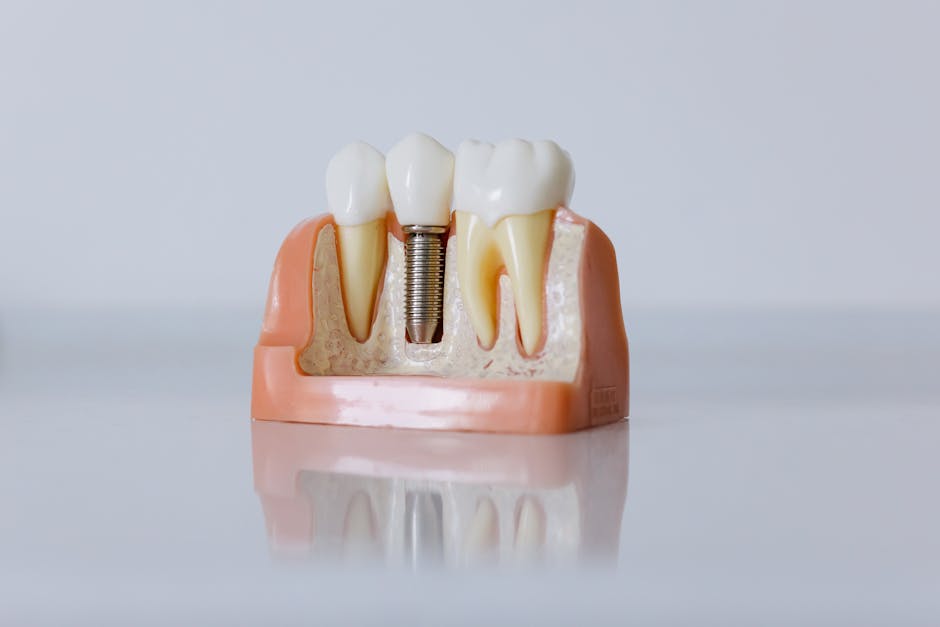
A single tooth implant is placed directly into the jawbone at the position of the missing tooth. It stands entirely on its own, with no anchoring, no clipping, and no grinding of the teeth on either side. That independence is not just a convenience — it is one of the most clinically significant features of the treatment.
For anyone in Nottingham weighing up their options after losing a tooth, modern single dental implant treatment is built around exactly this principle: restoring what is lost without compromising what remains. Understanding why that matters starts with understanding what happens to the jaw when a tooth goes missing and nothing is done about it.
Why a Gap Threatens the Teeth Around It
Neighbouring teeth drift into empty spaces
Teeth are held in position partly by the pressure of the teeth next to them. Remove one tooth from that line-up and the balance shifts. The teeth on either side of the gap — and sometimes the tooth directly above or below it — begin to lean or drift towards the empty space over time.
This movement is gradual, but the consequences are not trivial. As teeth tilt out of their correct positions, bite alignment changes. Chewing forces that were once distributed across a full arch get concentrated unevenly, putting strain on teeth that were never designed to bear it alone. Gaps between drifting teeth also become harder to clean, raising the risk of decay and gum disease in areas that were previously straightforward to maintain.
The longer the gap is left, the more entrenched this drift becomes — and the more complex any future treatment will need to be to correct it.
Bone loss weakens the roots of adjacent teeth
Beneath the gum line, something equally significant is happening. The jawbone in the area of a missing tooth begins to resorb — meaning the body gradually breaks down and withdraws the bone tissue that used to surround and support the tooth root. This process starts within the first few months after a tooth is lost and continues over years if left unaddressed.
The bone loss does not stay neatly contained to the exact site of the missing tooth. As the ridge of the jaw shrinks, the bone supporting the roots of adjacent teeth can also be affected. Over time, this reduces the structural foundation those teeth rely on — making them more vulnerable to mobility, sensitivity, and eventually, loss.
This is why the question of replacing a single missing tooth is never really just about aesthetics. It is about protecting the entire neighbourhood of teeth around that gap.
How a Single Implant Protects Adjacent Teeth
1. No grinding or alteration of surrounding teeth
The most direct form of protection a single implant offers is simply leaving adjacent teeth completely alone. No part of the implant procedure requires reducing, reshaping, or drilling into the teeth on either side of the gap. They remain structurally intact throughout — before, during, and after treatment.
This is not a small thing. Grinding a tooth down to a peg shape, as required for a traditional bridge, removes healthy enamel that can never be replaced. It permanently changes the tooth, increases its sensitivity, and introduces a long-term reliance on the covering crown to protect what remains underneath. A single implant sidesteps this entirely.
2. Prevents drift and preserves bite alignment
By filling the gap left by a missing tooth, an implant removes the empty space that neighbouring teeth would otherwise migrate into. The restored tooth holds its position in the arch, maintaining the natural spacing and alignment of the surrounding dentition.
Bite alignment is not just a cosmetic concern. When teeth drift, the way the upper and lower jaws meet changes. This can lead to uneven wear, jaw joint discomfort, and increased stress on specific teeth during chewing. A well-placed implant restores the functional geometry of the bite, protecting neighbouring teeth from the compensatory strain that drift would otherwise cause.
3. Stimulates the jawbone through osseointegration
Osseointegration is the process by which the titanium post of a dental implant fuses with the surrounding jawbone. Over a period of several months following placement, bone cells grow around and bond to the titanium surface, anchoring the implant as securely as a natural tooth root.
This fusion does more than hold the implant in place. The mechanical stimulation of biting and chewing is transmitted through the implant into the bone, signalling to the body that the bone in that area is still in use and should be maintained. This is the same signal a natural tooth root provides — and its absence after tooth loss is precisely what triggers the resorption process described earlier. By restoring that stimulus, an implant actively protects the bone density that the roots of adjacent teeth depend on.
4. Distributes chewing forces evenly, reducing stress on neighbours
A gap in the dental arch forces the remaining teeth to take on chewing forces they were not designed to handle alone. Over time, this uneven load can cause accelerated enamel wear, craze lines, and in more severe cases, cracks in the teeth bearing the extra burden.
A single dental implant restores a functional biting surface at the position of the missing tooth, redistributing those forces across the arch as nature intended. Adjacent teeth are no longer compensating for an absence — they return to working as part of a complete, balanced system.
Implants vs. Bridges: A Structural Difference That Compounds Over Time
A dental bridge is the most common alternative to a single tooth implant. It uses a false tooth held between two crowns, which are cemented onto the neighboring teeth. It can restore appearance and chewing function, but the structure is very different from an implant.
To place a bridge, the two adjacent teeth often need to be permanently reshaped, even if they are healthy. Those teeth then become supports for the bridge and take on extra pressure, increasing the risk of decay, root canal issues, or future failure.
A single dental implant avoids that problem. It stands on its own, does not rely on nearby teeth, and leaves them untouched. It also replaces the tooth root, helping preserve jawbone in a way a bridge cannot. Over time, that difference can matter as much as the visible tooth replacement itself.
What ‘Lasting a Lifetime’ Really Means
The titanium post: designed to last permanently with proper care
The phrase dental implants last a lifetime is widely used — and for the titanium post, it is an accurate statement when backed by proper care. Titanium is extraordinarily resistant to corrosion, and once fully integrated with the jawbone, the post is not subject to the decay that affects natural teeth. With good oral hygiene and regular professional check-ups, there is no inherent biological reason for the implant root to fail.
That said, the long-term success of the post is not unconditional. Peri-implantitis — an inflammatory condition affecting the gum and bone around an implant, similar to gum disease — is the primary cause of implant failure over time. It is almost always preventable with consistent brushing, flossing around the implant, and routine hygiene appointments. The implant itself is permanent by design; maintaining the environment around it is what protects that permanence.
The crown: typically replaced every 10-15 years due to wear
The crown sitting on top of the implant has a different lifespan story. Unlike the titanium root, the crown is subject to the same daily wear forces as any other tooth — biting, chewing, and grinding all take their toll on the material over time. Most crowns on single implants last between 10 and 15 years before surface wear, minor chipping, or changes in the surrounding gum line make replacement the sensible choice.
Replacing a crown is a straightforward procedure that does not affect the titanium post beneath it — the root stays in place, and a new crown is simply attached. This is a routine maintenance consideration rather than a failure of the treatment, and it is worth factoring into any long-term thinking about implant care.
The clinicians at Nottingham-based Arnold Dental & Implant Centre note that long-term implant success depends on more than the procedure itself. Routine dental check-ups allow the crown, surrounding gum, and supporting bone to be monitored so that any small problems can be addressed before they develop into more significant complications.
Arnold Dental & Implant Centre
77C High Street, Arnold
Nottingham
Nottinghamshire
NG5 7DJ
United Kingdom


