
Key Takeaways
- Termite treatment cost shifts based on infestation severity, termite species, home size and layout, and how easy the foundation is to reach for trenching or drilling
- A spot treatment for a small, localized problem costs far less than a liquid barrier, bait system, or whole-structure fumigation needed for widespread damage
- Subterranean termites typically call for liquid barriers or bait stations, while drywood termites living above ground may require fumigation that does not stop subterranean termites from coming back
- Bait systems work slowly because termites have to carry the bait back to the colony first, so full colony control can take several months
- Comparing the upfront treatment price against renewal, inspection, and monitoring costs in writing reveals the true long-term cost of protecting a home
Finding mud tubes along the foundation or opening a termite estimate for the first time tends to raise the same question: why does this number look so different from what a neighbor paid? According to experts like Connor’s Pest Pros, termite treatment pricing is not arbitrary. It reflects a mix of how bad the problem is, what kind of termite is involved, how the home is built, and how much labor it takes to reach the places termites hide.
Why Every Termite Quote Looks Different
Two homes on the same Greensboro street can receive two very different termite quotes, even if both have subterranean termites. The difference usually comes down to five factors working together: how far the infestation has spread, the termite species involved, the size and construction of the home, how accessible the foundation is, and which treatment method fits the situation best. A technician walking a property is pricing out labor, materials, and time rather than assigning a flat number to a service call.
Infestation Severity Sets the Baseline
How far termites have already spread through a structure is often the single biggest factor in a quote. A technician who finds a handful of mud tubes near one corner of the foundation is looking at a much smaller job than one who finds termite activity in multiple rooms, the attic, and the crawl space.
Localized Spots vs. Widespread Damage
A localized infestation, caught early, may only need a targeted spot application around the affected area, which tends to land at the lower end of typical termite treatment pricing since it involves less material and less labor time. Widespread infestations are a different story. When termites have moved through several areas of a structure, a technician may recommend a full liquid barrier around the entire perimeter, a complete bait station system, or in severe cases, a combination of treatments. Treatment costs typically range from $263 to $1,033, with most homeowners paying around $621, though severe infestations can push that to $1,750 or more. A small spot treatment may run as low as $75, while the scope of the job is ultimately what drives the final number.
Termite Species Changes the Approach
Not all termites behave the same way, and the species found during an inspection directly shapes which treatment method makes sense. This is one of the first things a technician checks before writing up a quote, because the wrong method for the wrong species wastes money and leaves the colony intact.
Subterranean Termites and Liquid Barriers
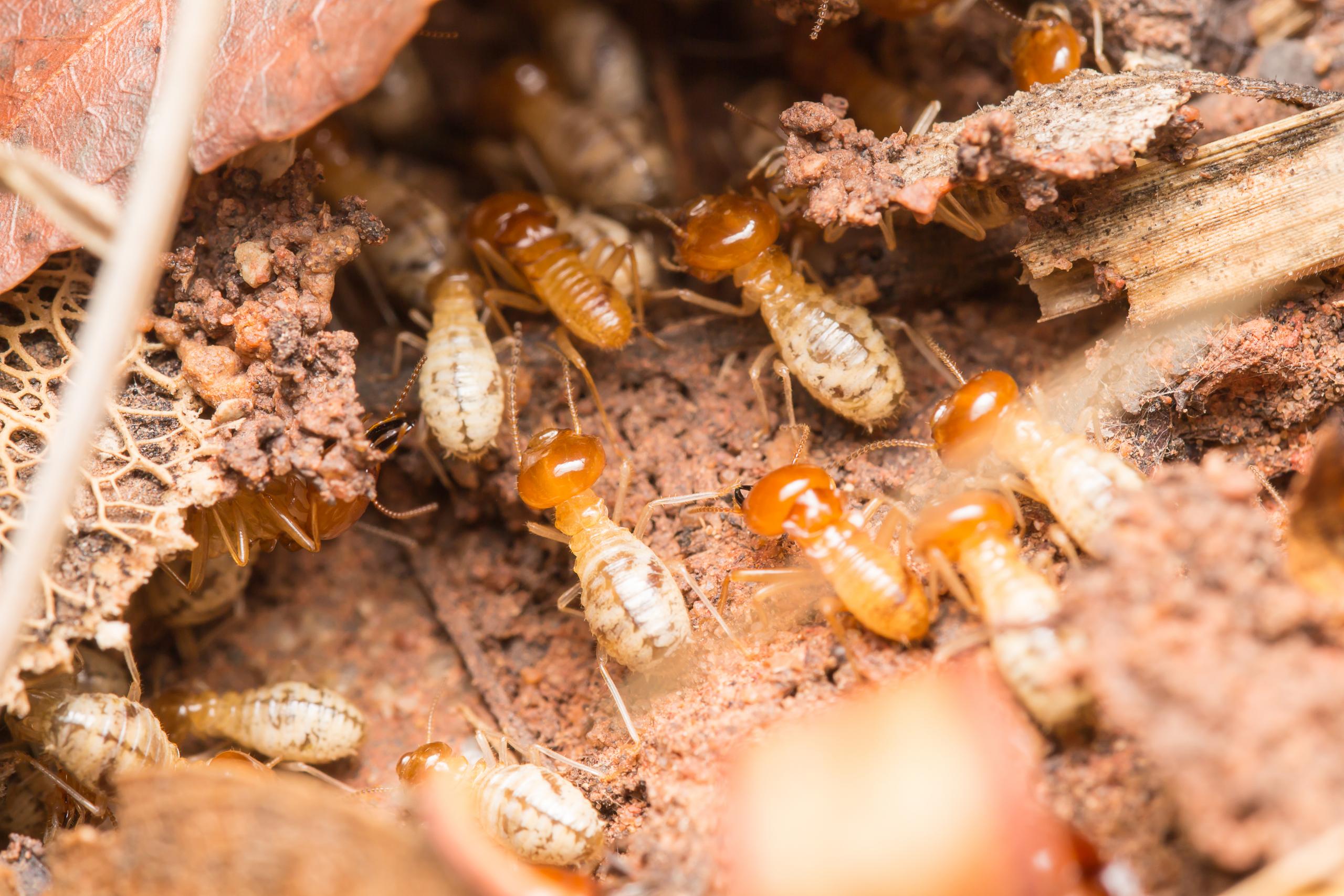
Subterranean termites live underground and travel up into a structure through soil contact, mud tubes, or small cracks in a foundation. Treating them usually involves a liquid termiticide applied in the soil around the foundation, creating a barrier termites cannot cross without picking up the product and carrying it back to the colony. Liquid barrier treatments are commonly priced per linear foot of foundation, which means the perimeter of a home plays a direct role in the final number.
Drywood Termites and Fumigation
Drywood termites set up colonies inside wood above ground, often in attics, wall framing, or furniture, rather than needing contact with soil. When an infestation is widespread or hidden deep inside structural wood, whole-structure fumigation may be the only way to reach every colony. Fumigation involves tenting the entire home and is priced by square footage rather than linear footage of foundation. Fumigation targets the drywood termites already inside the structure, but does nothing to stop subterranean termites from moving in afterward, so a separate soil treatment or bait system is often still needed for long-term protection.
Bait Systems and Slow-Acting Colony Control
Bait systems take a different approach entirely. Stations placed around the property contain a slow-acting bait that termites carry back to share with the rest of the colony, gradually weakening and collapsing it from the inside. Because this process depends on termites finding the bait and bringing it home, colony control through bait stations can take several months rather than being an instant fix. Bait systems are also priced by linear footage, similar to liquid barriers, which is one more reason the shape and size of a home’s foundation matters so much to the final quote.
Home Size, Layout, and Construction Matter
A bigger home simply takes more material and more labor to treat, whether the method involves trenching soil around a wide perimeter or tenting a sprawling roofline for fumigation. Larger homes generally require more labor, more time, and more pesticide volume, all of which show up as higher line items on an estimate.
Layout matters just as much as square footage. A home with a simple rectangular footprint is faster to treat than one with multiple additions, wings, or an irregular foundation shape, since each corner and transition point adds inspection and application time. A 2,000-square-foot home typically has a foundation perimeter of about 150 to 180 linear feet, which helps explain why linear-foot pricing on a liquid or bait treatment can vary so much from house to house.
Foundation Access Can Add Time and Cost
Getting to the foundation is not always straightforward, and difficult access almost always adds time to a termite job. A technician who can walk freely around an open crawl space is working a lot faster than one who has to maneuver through a cramped, cluttered one.
Crawl Spaces, Slabs, and Drilling Through Concrete
Homes built on a concrete slab often require drilling through the slab itself to apply termiticide directly into the soil below, which adds both time and material cost compared to a home with an open crawl space. Properties with pavers or concrete nearby may cost more to treat specifically because of this drilling requirement, and a concrete patio, driveway, or slab walkway next to a home can add noticeable cost to a job when drilling is required to inject treatment underneath it. Tight or packed crawl spaces create the opposite problem: instead of drilling, technicians need extra time to maneuver around support piers and may need additional chemical injection points, which can raise chemical use and labor fees meaningfully.
Landscaping, Drainage, and Moisture Near the Foundation
What is growing or sitting next to a foundation affects both termite risk and treatment conditions. Mulch beds pressed up against siding, stumps left in the yard, firewood stacked near the house, decks with wood touching soil, and HVAC units that trap moisture all create conditions termites are drawn to, and they can also get in the way of a clean treatment application. Poor drainage around a foundation adds another layer of risk, since consistently damp soil is exactly the environment subterranean termites prefer. Clearing these conditions before a scheduled treatment, when possible, can make the job faster and may reduce how much material is needed to get full coverage.
Comparing Upfront Price to Renewal Costs
The number on an initial termite quote is only half the financial picture. Termite protection does not end once treatment is complete, and the choice of method determines what comes next and how much it costs over time.
Getting the Renewal Price in Writing
Conventional liquid treatments typically come with an annual renewal fee to maintain the chemical barrier’s effectiveness, while bait programs charge for the ongoing monitoring and periodic replenishment that keeps stations working. These are genuinely separate expenses from the initial treatment, and they can add up meaningfully over several years of homeownership. A smart move before signing any contract is asking the provider for the renewal price in writing, rather than comparing providers based solely on their first-year quote. Two companies can offer nearly identical treatment prices up front while charging very different amounts for renewal year after year.
What Inspections, Callbacks, and a Termite Bond Cover
Many termite protection programs bundle in extras worth understanding before signing anything. Common inclusions are an annual inspection by a trained technician, retreatment callbacks if termites return during the contract period, and sometimes a termite bond. A termite bond typically covers the cost of retreatment, and in some cases repair of new termite damage, as long as the home stays under an active contract. Coverage details vary by provider and contract terms, so it is worth reading exactly what a bond does and does not include rather than assuming all bonds work the same way.
The True Cost Includes What Comes After Treatment
Putting the full picture together, a termite estimate reflects infestation severity, termite species, home size and construction, and foundation accessibility, all working together to set the initial price. The number that often gets overlooked is the second one: what happens year two, year five, and year ten down the road. Monthly protection plans can vary widely in price depending on the service level and provider, showing how some structure ongoing protection as a monthly cost rather than a lump-sum renewal. Whether a provider prices protection as a monthly plan, an annual renewal, or a bundled bait monitoring fee, asking for that long-term number alongside the initial treatment quote is the clearest way to understand what termite protection will actually cost over the life of owning a home.
To prevent surprises, request a full breakdown of what happens after the first treatment so the complete cost of termite control is clear from day one. Ask an expert like Connor’s Pest Pros for an inspection and a quote before you begin.
Connor’s Pest Pros
5410 Port Royal Rd
Springfield
VA
22151
United States


