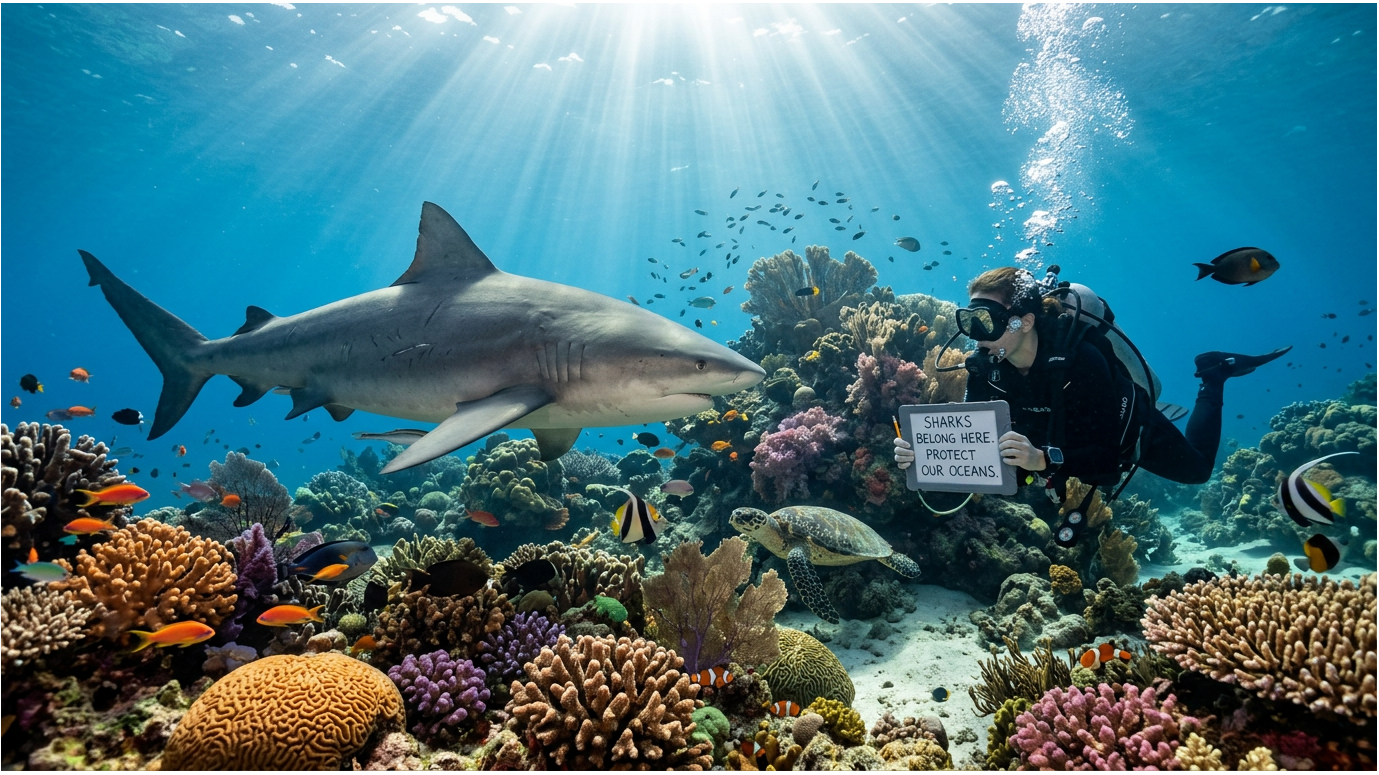
Marine conservation advocates are drawing increased attention to the critical role sharks play in sustaining the health of the world’s oceans. As new reports continue to highlight declining shark populations in several major ocean regions, environmental groups are emphasising the importance of public awareness and collective action.
Sharks have existed in Earth’s oceans for more than 400 million years, evolving into some of the most efficient and important predators in marine ecosystems. Their presence helps maintain balance among marine species by preventing the overpopulation of certain fish and preserving the delicate relationships that keep coral reefs and other habitats thriving.
However, scientists warn that the survival of many shark species is now under serious threat. Industrial fishing practices, accidental bycatch, habitat degradation, and continued demand for shark fins have placed enormous pressure on populations that were once abundant throughout the world’s oceans.
In many areas, conservation studies show that shark numbers have declined sharply over the last few decades. Some species have experienced reductions of more than 80 per cent, raising concerns among marine researchers about the long‑term impact on ocean biodiversity.
Environmental advocates say that protecting sharks is not simply about saving a single group of animals—it is about protecting the broader health of ocean ecosystems. When apex predators disappear, the ripple effects can disrupt entire food webs, ultimately affecting fisheries, coral reefs, and coastal communities that rely on healthy oceans.
This growing awareness has led to new educational initiatives aimed at informing the public about the ecological importance of sharks. Campaigns designed to highlight conservation efforts are encouraging individuals to learn more about the challenges facing marine ecosystems and the actions that can support long‑term protection efforts.
Among these initiatives is an ongoing awareness campaign highlighting the importance of shark conservation and ocean stewardship. Through educational resources and conservation storytelling, the initiative encourages readers to explore the role sharks play in maintaining marine biodiversity. Those interested in learning more about the campaign and its conservation mission can explore the project at https://everwonderadventure.com/save-sharks.
Supporters of marine conservation note that small actions—such as raising awareness, supporting conservation groups, and promoting sustainable ocean practices—can contribute to meaningful change when combined with larger policy efforts.
Public engagement continues to be one of the most powerful forces in conservation. As more people become aware of the ecological importance of sharks, momentum is building for stronger protections and expanded conservation programs worldwide.
Advocates also emphasise that individuals who wish to support ongoing ocean protection initiatives have several ways to participate, from educational outreach to supporting organizations focused on marine conservation. Information about broader conservation participation opportunities can be found through https://everwonderadventure.com/support-us, where supporters can learn about ongoing initiatives dedicated to protecting marine ecosystems.
While the challenges facing sharks remain significant, conservationists believe that increasing awareness and global cooperation offer a promising path forward. With sustained effort from scientists, policymakers, and engaged citizens, there is growing hope that shark populations can recover and continue playing their essential role in maintaining healthy and balanced oceans.
Ever Wonder Adventure
One Oxley Rise
Singapore
Singapore
Singapore
238714
Singapore